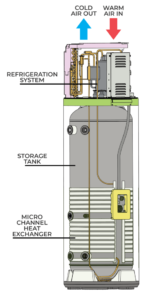
Noosa Hot Water describes how heat pumps operate through a sequence of stages that make them very efficient at heating water.
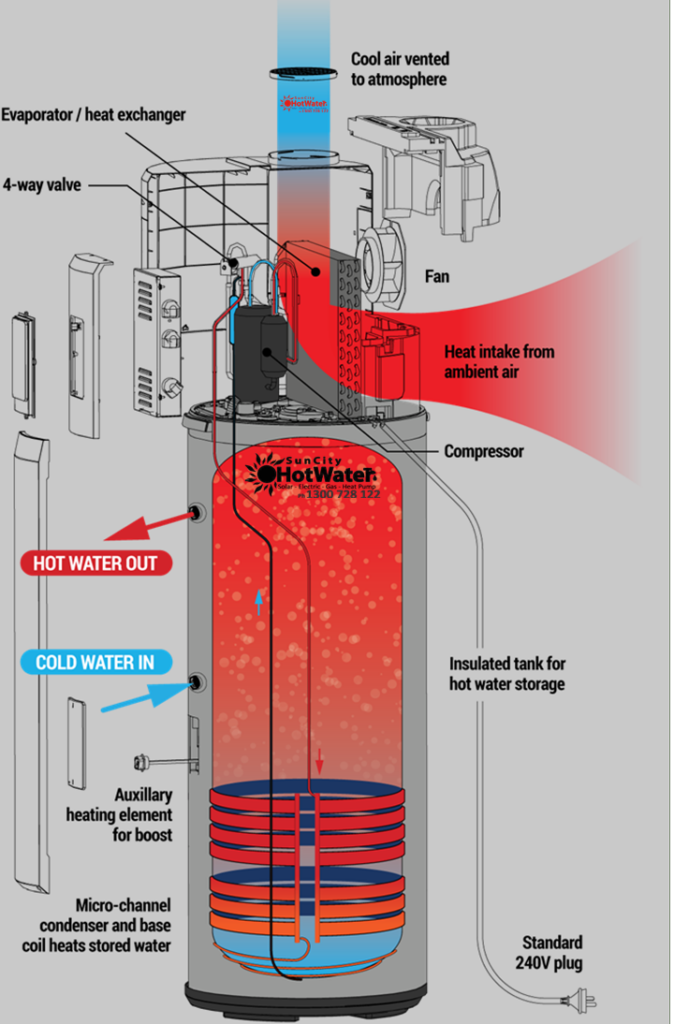
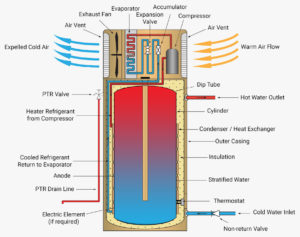
First, a liquid refrigerant travels into an evaporator where it draws warmth from the surrounding air and vaporises into a gas.
Next, an electric compressor squeezes the gas, increasing its temperature until it is hotter than the water stored in the tank.
That hot gas then moves into a condenser and releases its heat to the water, condensing back into a liquid.
The liquid continues through an expansion valve where its pressure drops and it cools down, allowing it to return to the evaporator and begin the cycle again.
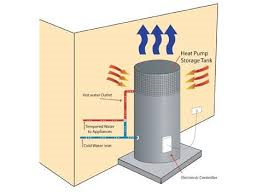
Electricity powers the compressor and fan, but unlike conventional electric hot water systems that heat water directly, a heat pump transfers heat from the air to the water. This method moves substantially more heat energy while consuming far less electricity. Performance is influenced by ambient air temperature — when the air is warmer than the refrigerant the system absorbs heat easily, while colder conditions reduce efficiency. Some modern heat pumps are engineered to function in sub-zero temperatures, and in certain situations they can be sited indoors in large, well-ventilated areas like garages. Noosa plumbers often advise on the best placement for optimal performance.
To keep the evaporator absorbing heat effectively, a continuous supply of fresh air is required. A built-in fan pulls in air and expels the cooled air back to the atmosphere.
Heat pump water heaters typically come in two primary configurations.
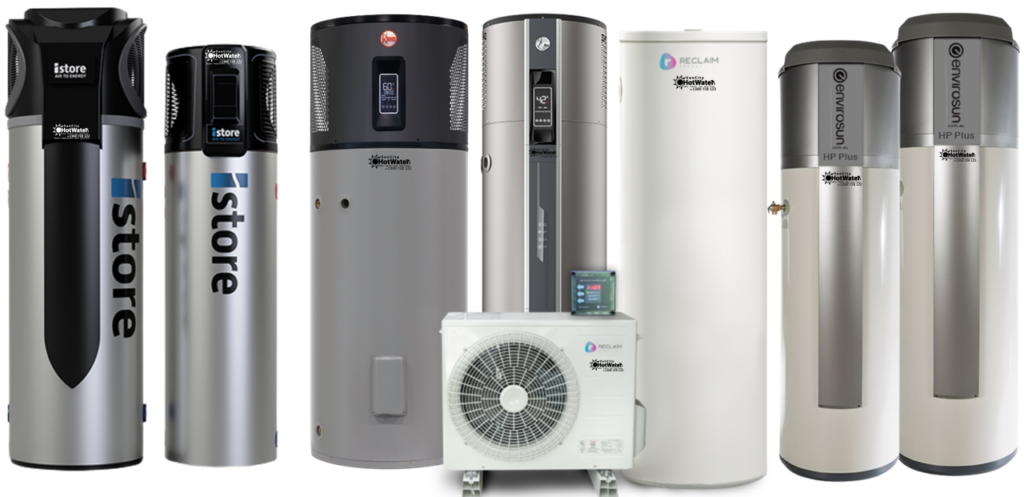
Integrated or compact models house the compressor and storage tank within a single unit.
Split systems separate the tank and compressor—much like a split air conditioner—and link them via refrigerant lines.